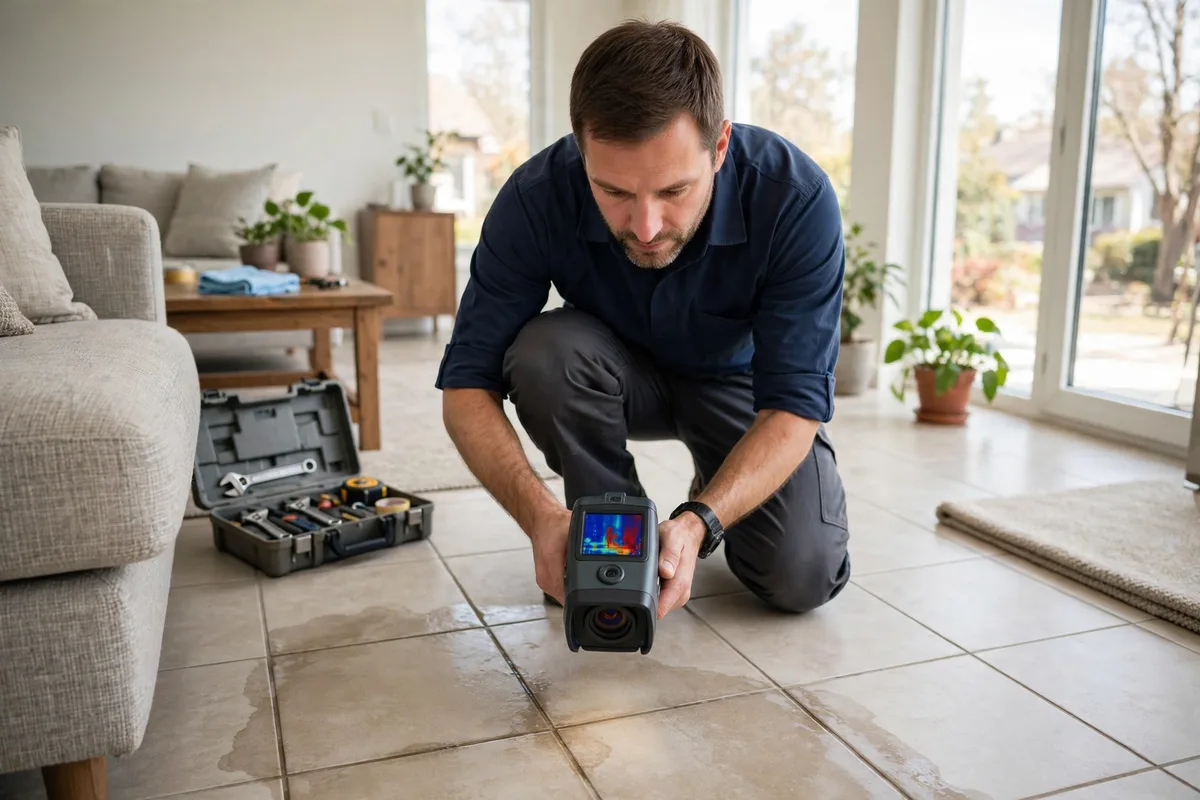
Published market ranges for leak detection run $120–$400 (HomeYou) and $190–$720 for electronic and acoustic detection (Plumbing Advisors). Slab leak location runs $310–$1,070 (Plumbing Advisors). The repair is quoted separately, per job. Most single-family homes here get a per-job quote that depends on flooring, pipe material, and whether the line can be rerouted instead of excavated. Slab leak detection is a diagnostic service that pinpoints where a pressurized water line under your concrete foundation is losing water, so you can fix one spot instead of jackhammering blind. The rest of this page breaks down 2026 pricing in Sparks, what pushes your number up or down, and when insurance actually pays.
What slab leak detection costs in Sparks right now
Typical 2026 pricing in the Reno-Sparks area splits into three buckets, and knowing which bucket you're in tells you what the invoice will look like before anyone shows up.
- Detection only: published market ranges run $120–$400 (HomeYou) and $190–$720 for electronic and acoustic detection (Plumbing Advisors); slab leak location $310–$1,070 (Plumbing Advisors). Acoustic listening, thermal imaging, pressure isolation on the main, and a marked location on the floor.
- Detection plus access: quoted per job, depending on how much concrete and flooring has to come up. That includes cutting and removing a small section of slab or flooring so the repair can happen.
- Detection plus repair: quoted per job, depending on depth, access, and materials. Rerouting the line through the attic or walls is usually the smaller job; breaking out slab, repairing the copper or PEX, and pouring new concrete is the bigger one.
Those quotes assume a standard 1,500-2,500 sq ft home with a single-story slab. Two-story homes with the leak under the first floor, or homes with post-tension slabs, run higher because the repair has to avoid the tension cables.
If you've already had a plumber out for a different issue and they flagged moisture, it's worth having us confirm it properly. We handle slab leak detection Sparks NV with acoustic and thermal gear, and we mark the floor before we quote the repair so you're not guessing at scope.
What factors affect slab leak detection cost in Sparks
Six things move the price more than anything else, and most of them are about your house, not the leak.
1. Where the leak actually is
A leak under a tiled hallway is a different job than one under a glued-down engineered floor or a load-bearing wall. Flooring removal and replacement alone can swing the bill significantly.
2. Pipe material and age
Sparks has a lot of housing stock from the late 1970s through the 1990s with copper under the slab. Copper pinholes from our hard water are common. PEX and CPVC behave differently and sometimes can be rerouted instead of excavated, which drops the cost significantly.
3. Hot line vs. cold line
A hot-water slab leak usually shows up faster because you feel warm spots on the floor. Cold-line leaks are sneakier and take longer to isolate, which adds diagnostic time.
4. Access
If the leak is under a bathroom vanity, a closet, or an exterior wall line, access is cheap. Under a kitchen island with a granite top, it isn't. Access costs alone can be the biggest part of the job on a slab leak under a built-in cabinet run.
5. Repair method
Spot repair, reroute, or full repipe. A spot repair is the cheapest fix but only makes sense if the pipe around it is still sound. On a 1985 Sparks home with three prior pinholes, rerouting the whole hot side is usually the smarter spend.
6. Who you call
A general handyman with a stethoscope will charge less and miss more. A licensed leak detection specialist with thermal imaging and pressure isolation gear charges more and finds it the first time. The second visit is where the cheap option stops being cheap.
Detection vs. repair: what each line item actually buys
Homeowners often assume the detection fee comes off the repair bill. Sometimes it does, sometimes it doesn't, and it's worth asking before you book.
Here's what each line on a typical Sparks invoice covers:
- Pressure isolation test: Shut off fixtures and the irrigation, pressurize the system, and watch the gauge. Confirms there's a leak on the supply side.
- Acoustic listening: Amplified microphones on the slab surface pick up the hiss of water escaping under pressure. Works best on hot lines and larger leaks.
- Thermal imaging: Infrared camera shows temperature differences in the slab. Best for hot-water leaks and for confirming a location before cutting.
- Electronic leak location: Tracer gas or electrode probes for hard-to-hear leaks, deep slabs, or lines under tile.
- Access and repair: Quoted separately once the location is confirmed.
If your leak is outdoors - between the meter and the house, or under the driveway - that's a different job with different gear. We handle underground leak detection Sparks NV with the same acoustic and tracer methods, and the pricing structure is similar.
Does insurance pay for slab leak detection in Sparks?
Standard Nevada homeowners policies usually cover the water damage a slab leak causes, not the pipe repair itself. That distinction matters when you're looking at the final bill.
What typically gets covered:
- Drywall, flooring, and cabinetry damaged by water
- Mold remediation if it's tied to a covered loss
- Temporary lodging if the home is uninhabitable
What typically doesn't:
- The detection visit itself
- Breaking out and repairing the slab
- The pipe repair or reroute
Some carriers will reimburse detection if it's part of an approved claim, so save the invoice and the marked floor photos. If you're on a policy that includes "access and tear-out" coverage, that can cover the concrete work. Read your declarations page or call your agent before you authorize the repair - a 10-minute call has saved our customers four figures.
How long does slab leak detection take in Sparks?
Most detection visits run 1.5 to 3 hours. Straightforward hot-line leaks under a bathroom or kitchen floor are usually done in under two hours. Cold-line leaks, leaks under tile, or homes with irrigation tied into the same supply can push it to four hours.
If we're doing detection and repair in the same visit, plan for a full day. Concrete cure time adds another 24 to 48 hours before you can walk on the patch, and flooring goes back after that.
Here's the sequence we follow on a typical Sparks job:
- Shut off the main and isolate the irrigation.
- Pressurize the system and watch the gauge for 15-20 minutes.
- Walk the slab with acoustic gear and thermal camera.
- Mark the location with tape and photograph it.
- Quote the repair and access work before we cut anything.
You get the marked location and a written repair quote the same day, whether or not you hire us for the fix.
What to watch out for when you hire
The leak detection industry has a wide range of skill levels, and the cheap quote is often the expensive one.
Watch for these:
- Anyone who quotes a repair before locating the leak. If they haven't marked the floor, they're guessing.
- "Free detection with repair." That usually means the detection cost is baked into an inflated repair number.
- No thermal camera or acoustic gear on the truck. A stethoscope and a flashlight find maybe half the leaks we see.
- Pressure to repipe the whole house on the first visit. Sometimes it's the right call - but you should get the reasoning, not a sales pitch.
- No written scope. You should know what's included, what's not, and what the concrete and flooring work will cost before anyone swings a hammer.
We've been called in behind other companies more than once to re-locate a leak that was marked in the wrong room. It happens. The fix is to ask for the detection method and the marked location before you authorize anything.
When to call a professional
Call us when you see any of these: a water bill that jumped with no change in usage, warm spots on the floor, the sound of running water when every fixture is off, cracks in tile or drywall that appeared recently, or a musty smell near a baseboard.
Don't wait on a slab leak. A pinhole in copper under a Sparks slab can lose 30 to 50 gallons a day before you notice anything, and that water goes into the soil under your foundation. We've seen foundation movement, buckled hardwood, and mold colonies that all traced back to a leak that ran for three months.
Our team handles the full job - detection, access, repair, concrete, and a pressure test before we leave. If you're in one of the newer developments off Pyramid Way, we do a lot of work on Leak Detection in Spanish Springs where the slab-on-grade builds and hard water both contribute to copper pinholes. Same story over on the east side, where we run Leak Detection in East Sparks on a lot of 1970s and 1980s homes with original copper under the slab.
If the leak turns out to be in the drain line rather than the supply, that's a different diagnosis and a different repair. We also handle sewer leak detection Sparks NV with camera inspection, which is the only way to see what's happening inside a drain line under a slab.
Frequently Asked Questions
How much does slab leak detection cost in Sparks NV?
Detection alone: published market ranges run $120–$400 (HomeYou) and $190–$720 for electronic and acoustic detection (Plumbing Advisors); slab leak location $310–$1,070 (Plumbing Advisors). With access and repair, expect a per-job quote depending on depth, access, and materials. Most single-family homes in Sparks get a per-job quote, depending on flooring, pipe material, and whether the line can be rerouted instead of excavated.
What factors affect slab leak detection cost in Sparks?
Six main ones: leak location under the slab, pipe material and age, hot vs. cold line, access through flooring or cabinetry, repair method (spot fix vs. reroute vs. repipe), and who you hire. Access and flooring work alone can swing the bill significantly.
Does insurance pay for slab leak detection in Sparks?
Usually not for the detection or the pipe repair. Standard policies cover the water damage the leak causes - flooring, drywall, mold - and sometimes the concrete tear-out if you have access coverage. Save your invoice and call your agent before authorizing the repair.
How long does slab leak detection take in Sparks?
Most visits run 1.5 to 3 hours. Hot-line leaks under a bathroom or kitchen floor are usually under two hours. Cold-line leaks, tile floors, or irrigation tied into the same supply can take four hours. Detection plus repair is a full day, plus 24-48 hours of concrete cure time.
Is slab leak detection covered by insurance in Sparks?
Rarely as a standalone service. Some carriers reimburse detection if it's part of an approved water-damage claim. The repair itself - breaking concrete and fixing the pipe - is almost always out of pocket unless you've added specific coverage.
Get help with Leak Detection in Sparks
If your water bill jumped or you've got a warm spot on the floor, we'll find the leak, mark it, and quote the repair before we cut anything. Call Sparks Leak Pro at (775) 505-6540 and we'll get you on the schedule.