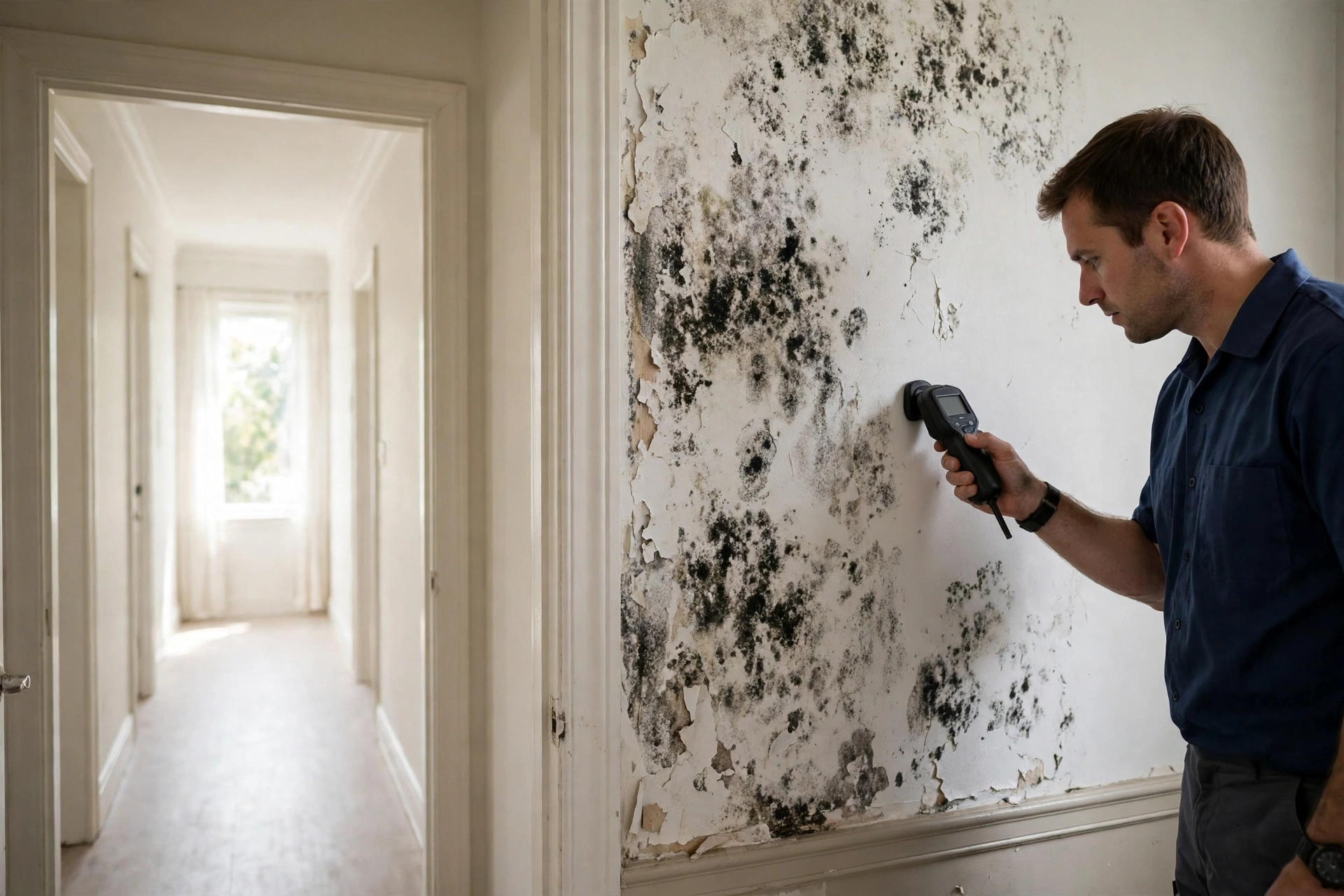
Mold After a Water Leak in Sparks: It Can Start in 48 Hours
Mold can start growing within 24 to 48 hours after a leak wets your walls, floors, or drywall. That is the EPA figure, and it is why the leak comes first. We do not do mold remediation. We only find the leak, so the water source can be fixed and the area can dry.
Why the leak comes first
A leak you cannot see keeps feeding water into the same wall, floor, or ceiling, day after day. The surface may look fine while the drywall behind it stays wet, and that wet material is where mold starts. Cleaning what you can see does not stop what you cannot see. Until the leak is found and the water source is fixed, the material gets wet again, and the mold comes back in the same place.
That is the whole point of this page: find the leak first. Our water leak detection service uses acoustic listening and thermal imaging to pinpoint where the water is coming from, behind walls, under floors, and inside ceilings, so the water can be stopped at its source. Once the leak is fixed and the area dries, a mold remediation professional handles the mold itself. We do not do that part, and we say so plainly.
The 24-48 hour timeline
The EPA guidance is to clean and dry damp or wet building materials and furnishings within 24 to 48 hours to prevent mold growth. Here is how that window plays out after a leak.
The first hours: water soaks in
Water from a leak soaks into drywall, flooring, and framing fast. A slow leak behind a wall can wet a large area before a single spot shows on the surface. At this point, drying the area is still simple, if the leak is found.
24 to 48 hours: mold can start
Mold can start growing within 24 to 48 hours after materials get wet, according to the EPA. This is the window to act in. If the leak is still running, the material stays wet, and the clock keeps running past it.
After 48 hours: growth continues while it stays wet
Past 48 hours, mold keeps growing as long as the material stays damp. The EPA notes that the key to mold control is moisture control. Stop the water, and the material can dry. Leave the leak running, and the growth keeps going.
Source: U.S. EPA, Ten Things You Should Know About Mold (updated 8 Sep 2026), epa.gov/mold. The EPA also recommends keeping indoor humidity between 30 and 60 percent to reduce mold growth.
Signs of mold after a leak
Most of these show up before you ever see mold itself. If you notice one of them after a leak, something is still wet.
A musty smell
A musty, earthy smell that was not there before, often strongest in one room or when the room has been closed up. The smell often appears before any visible growth, because the mold is behind the wall or under the floor.
Damp spots and soft drywall
A spot on the wall or ceiling that stays damp, paint that bubbles or peels, or drywall that feels soft when you press it. Any of these means water is still reaching that spot from behind.
Discoloration
Yellow, brown, or dark stains on walls, ceilings, or baseboards, or dark speckled patches on a damp surface. Stains that grow or darken over days mean the water is still coming.
Where mold grows after a leak
Mold grows wherever water sits on material that stays damp. After a leak, the most common spots in a Sparks home are behind walls fed by a slow pipe leak, under flooring where water has pooled, in damp drywall around a bathroom or kitchen leak, under sinks and tubs, and inside wall cavities you never see. It also shows up in places you rarely check, like the back of a closet against an exterior wall or the subfloor under a bathroom.
The reason these spots are hard to deal with is simple: you cannot dry what you cannot reach, and you cannot reach it until you know where the water is coming from. That is what a moisture meter and a thermal camera are for. They show the wet area behind the surface, so the leak can be found at its source instead of guessed at from the stain.
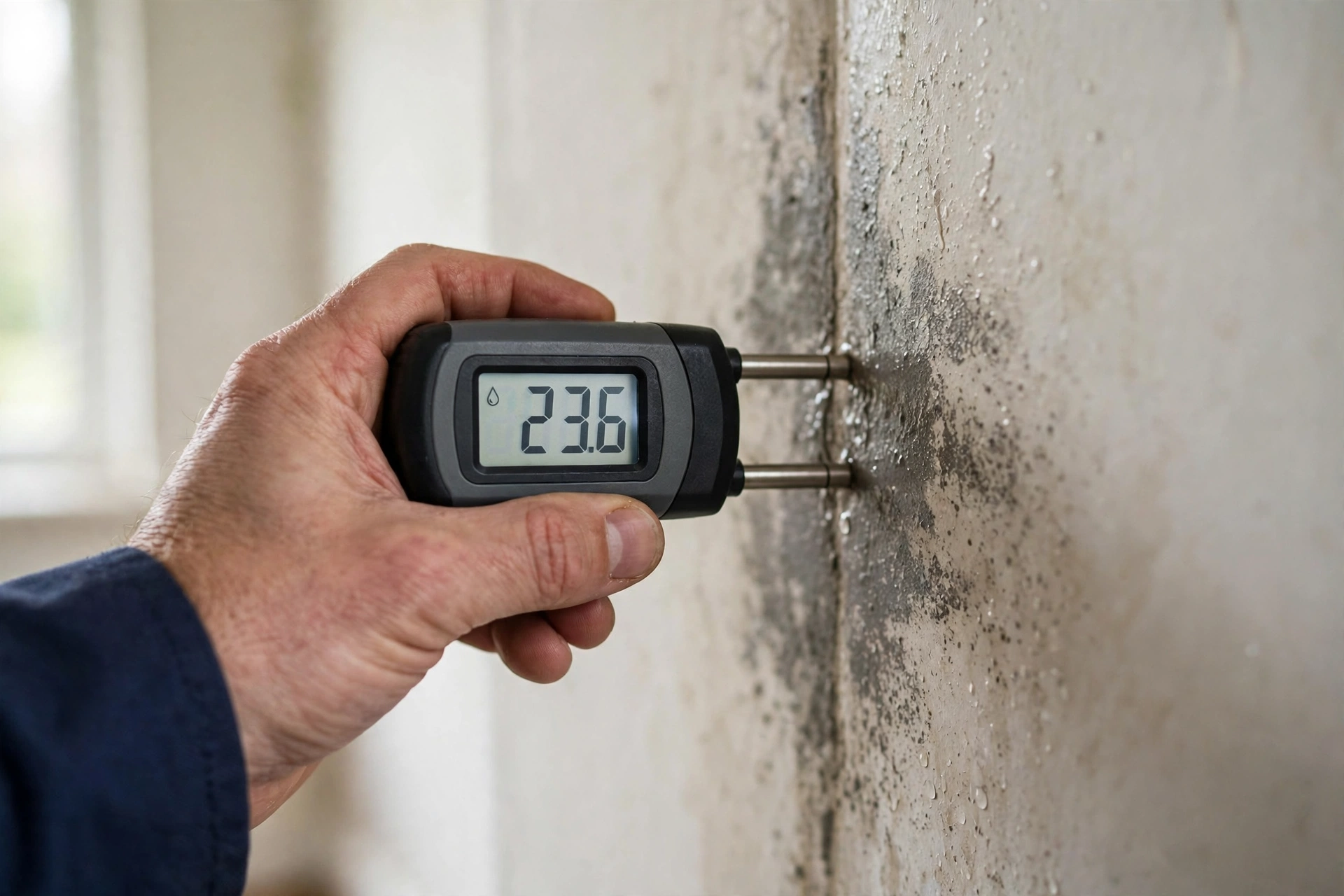
The meter shows what the wall hides
A moisture meter reading on a damp wall corner tells you the material is still wet, even where the surface looks dry. If the reading stays high days after a leak, water is still reaching that spot. Find the leak, fix it, and the wall can finally dry.
Why finding the leak comes first
Mold returns if the water source is not fixed. That is the one fact that decides the order of work. A leak that keeps running re-wets the same drywall, the same flooring, and the same framing, so anything done to the mold alone is undone the next time water reaches it. The leak is the cause. The mold is the result. Fix the cause first.
Finding the leak first also keeps the repair small. A leak pinpointed with acoustic listening and thermal imaging can be opened up in one spot, fixed, and dried. A leak guessed at from a stain can mean opening wall after wall while the water keeps coming from somewhere else. The 24 to 48 hour window from the EPA is short, so the fastest useful step after a leak is not cleaning. It is finding where the water is coming from.
What we do, and what we do not do
What we do
We find the leak. We use acoustic listening and thermal imaging to pinpoint where water is coming from, behind walls, under floors, and inside ceilings. We mark the spot and give you a written report with the location, so the water source can be fixed and the wet area can dry. Open 8 AM - 8 PM. Emergency service available.
What we do not do
We do not do mold remediation. We do not remove mold, clean mold, or treat mold. We only find the leak. Once the leak is found and fixed, a mold remediation professional handles the mold itself. If you call us expecting a cleanup crew, we will tell you the same thing: our job is the leak, and the leak comes first.
Mold after a leak questions we hear every week
Straight answers about mold after a water leak, the 24-48 hour window, and why the leak comes first.
How fast can mold start after a water leak?
Mold can start growing within 24 to 48 hours after building materials get wet, according to the U.S. Environmental Protection Agency (EPA). The EPA guidance is to clean and dry damp or wet building materials and furnishings within 24 to 48 hours to prevent mold growth. The clock starts the moment water reaches drywall, flooring, or framing, not the day you first notice a smell or a stain. In a Sparks home, a leak hidden behind a wall can keep materials wet for days before anyone sees it, which is why finding the leak fast matters more than anything else you do after it.
What does mold smell like after a leak?
Mold after a leak usually smells musty, earthy, or stale, like a damp basement or old wet cardboard. The smell often shows up before you can see anything, because the growth is behind drywall, under flooring, or inside a cabinet where the leak is feeding it. If a room smells musty after a leak, or the smell gets stronger when the room is closed up, treat it as a sign that something is still wet somewhere. The smell points to moisture, and moisture points to a leak that has not been found yet.
Where does mold grow after a water leak?
Mold grows where water sits on materials that stay damp: behind drywall, under flooring, in damp drywall around a leak, under sinks and tubs, and inside wall cavities fed by a slow pipe leak. It also grows in places you rarely look, like the back of a closet against an exterior wall or the subfloor under a bathroom. The EPA notes that the key to mold control is moisture control, and there is no practical way to eliminate all indoor mold spores. As long as the material stays wet, growth can continue in that spot.
Why should I find the leak before dealing with mold?
Because mold returns if the water source is not fixed. Cleaning or removing visible mold does nothing about the leak that is still feeding water into the wall, the floor, or the drywall behind it. The damp material gets wet again, and the growth comes back in the same place. That is why leak-first is the order that works: find the leak, stop the water at its source, and let the area dry. Only then does dealing with the mold itself make sense, and that part is a job for a mold remediation professional, not for us.
Do you remove mold or do mold remediation?
No. We do not do mold remediation, and we do not remove mold. We only find the leak. Our work is acoustic listening and thermal imaging to pinpoint where the water is coming from, so the water source can be fixed and the wet area can dry. Once the leak is found and fixed, a mold remediation professional handles the mold itself. We say this plainly so you do not call us expecting a cleanup crew: our job is the leak, and the leak comes first.
What should I do when I smell mustiness after a leak?
First, note where the smell is strongest and check for damp spots, soft drywall, or discoloration nearby. If you can see where water is coming from, shut off the water to that fixture, or the house shut-off valve if you cannot tell. Then call us so we can find the leak with acoustic listening and thermal imaging. The EPA guidance is to clean and dry wet materials within 24 to 48 hours to prevent mold growth, so do not wait a week to see if the smell fades on its own. A smell that stays means something is still wet.
Find the leak behind the mold
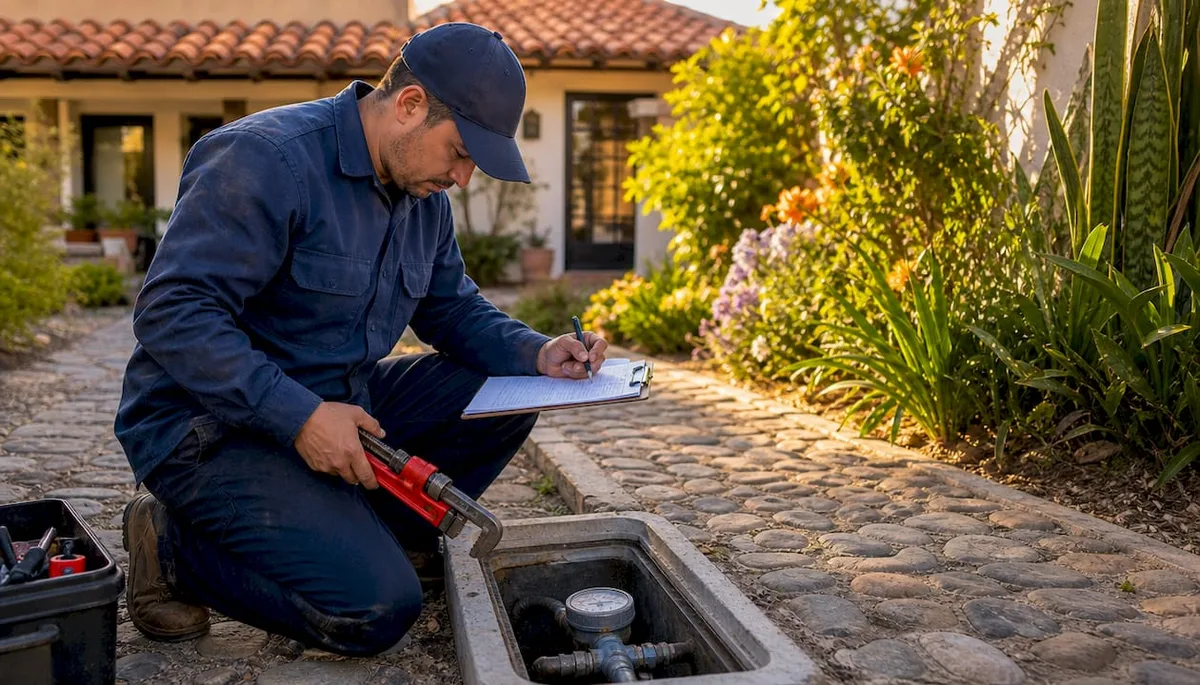
Water Leak Detection
When a musty smell or a damp spot tells you something is still wet, our water leak detection service tracks the water behind walls, under sinks, and in ceilings with acoustic and thermal tools.
Learn more →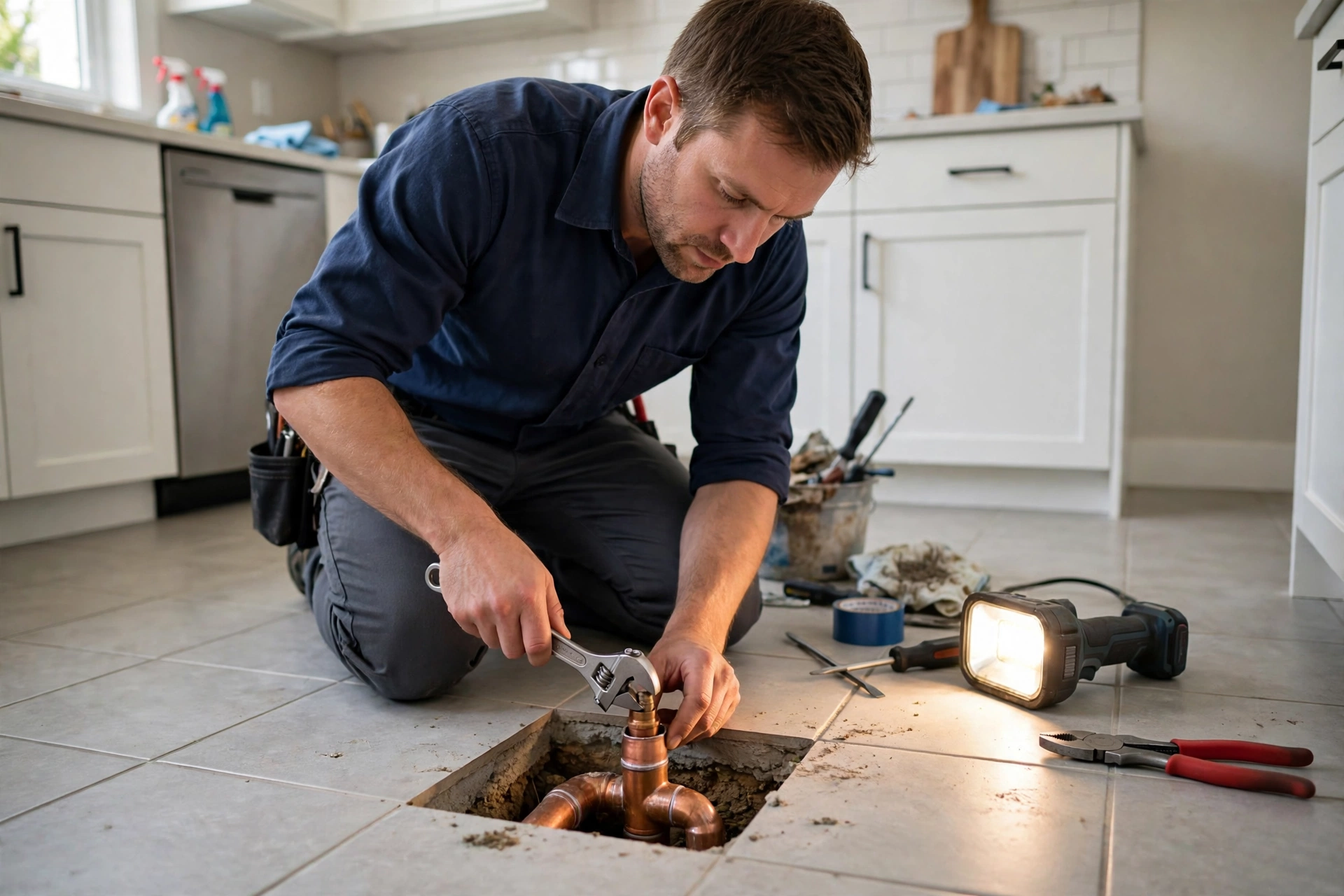
Slab Leak Detection
A leak under the slab can keep floors and lower walls damp for weeks, which is where mold starts out of sight. Our slab leak detection service finds it under the concrete.
Learn more →Areas we serve
Serving Sparks & Surrounding Areas · Based in Sparks, NV. Seven neighborhood areas, matched to the ZIP codes where our service is focused. If your street sits between two areas below, you are still in Sparks. Call and give us your ZIP.
Central Sparks →
Downtown Sparks, Victorian Square, and Greenbrae. Older housing stock, where original plumbing is now at its highest-risk age.
Spanish Springs →
Including Los Altos. Larger lots, longer yard lines.
Wingfield Springs →
Higher and more exposed, the freeze-risk area we watch most closely in December and January.
Kiley Ranch →
Newer master-planned homes, now old enough for first-generation fitting and water heater failures.
D'Andrea →
Including Pioneer Meadows and Stonebrook edges. Hillside lots, where yard leaks can travel before surfacing.
Sparks Marina →
Around the marina and its surrounding streets, in Sparks, NV 89431.
East Sparks →
East Sparks and the Vista Boulevard area, including Stonebrook.
ZIP codes in our core service area
Serving Sparks, NV and Washoe County, in Sparks, NV 89431. We name only the areas we actually serve on this page.
Not sure if we cover your street? Call (775) 505-6540 and give us your ZIP code.
Smell mustiness after a leak? Find the leak first.
Mold can start within 24 to 48 hours, and it returns if the water source is not fixed. We find the leak with acoustic listening and thermal imaging, mark the spot, and give you a written report. Open 8 AM - 8 PM. Emergency service available.