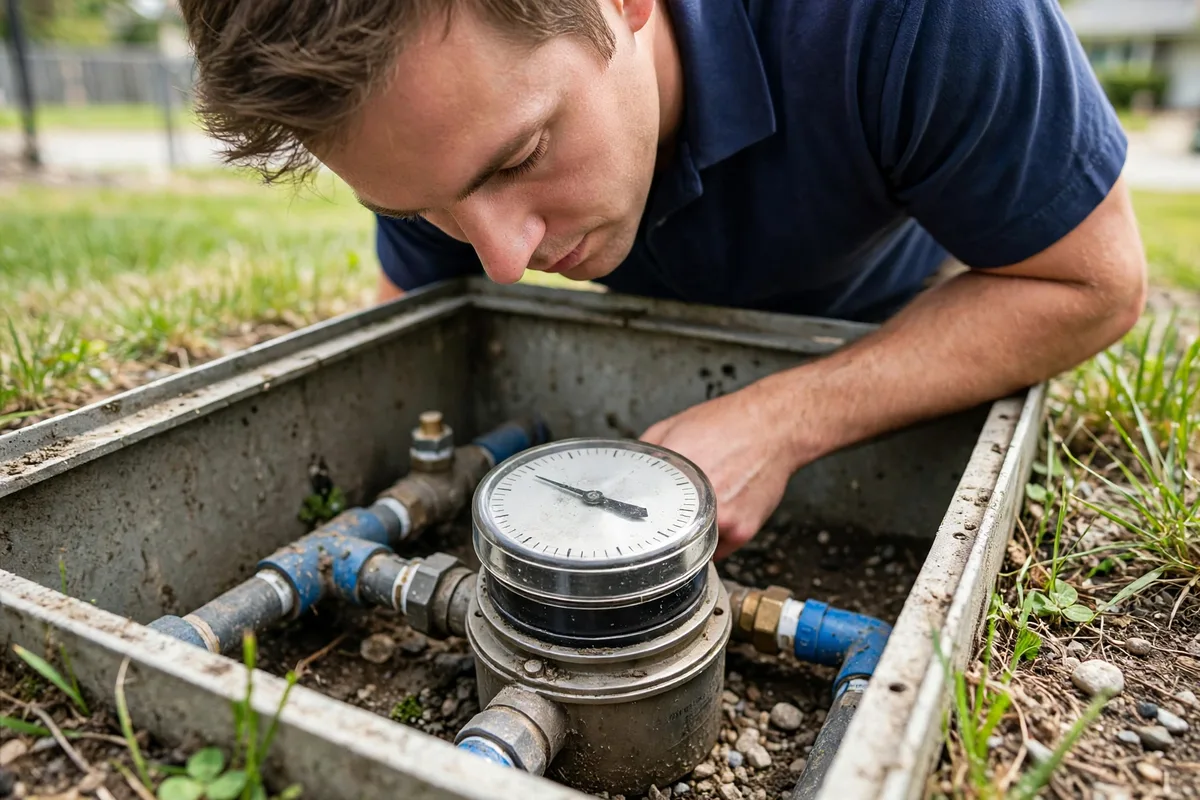
Your water bill in Sparks jumped because water is leaving your plumbing somewhere between the city meter and your fixtures - and roughly 9 out of 10 sudden spikes we investigate turn out to be a hidden leak, not a rate increase. The second most common cause is a toilet that runs silently between flushes, which can waste 200 gallons a day without making a sound. This post walks through how to confirm a leak in about 15 minutes, the six causes we find most often in Sparks homes, what a normal bill looks like here, and when it's time to call us.
The short answer: a leak is the most likely cause
Why is my water bill suddenly so high in Sparks is a question that usually has one of two answers: either your usage genuinely went up, or water is escaping somewhere you can't see. Rate changes from Truckee Meadows Water Authority are announced months ahead and apply to every customer, so if your neighbors' bills are flat and yours doubled, the problem is on your side of the meter.
Water leak detection in Sparks NV is the process of finding that escaping water - inside walls, under slabs, in the yard, or at a fixture - before it damages drywall, flooring, or your foundation. It's not guesswork. We use acoustic listening equipment, thermal imaging, and pressure isolation to pinpoint the leak to within a few inches before we open anything up.
One number puts this in perspective: a leak the width of a pencil lead - about 1/16 of an inch - loses roughly 6,000 gallons a month. At current Sparks rates, that's real money, and it's the single most common reason we get called out.
How to confirm a leak in 15 minutes using your water meter
How to find a water leak causing high bill in Sparks starts at your meter box, usually near the curb or in a concrete vault at the property line. You don't need tools. You need 15 minutes and no water running in the house.
- Shut off every fixture - faucets, washing machine, dishwasher, ice maker, irrigation, pool auto-fill.
- Find your meter and note the position of the small triangle or low-flow indicator dial.
- Watch it for 10 minutes. If it moves at all, water is passing through the meter.
- Shut the main valve inside the house (usually where the line enters, often in the garage or a utility closet).
- Check the dial again. If it stops, the leak is inside the house. If it keeps spinning, the leak is between the meter and the house - an underground line.
That last distinction matters because it changes what we bring to the job. An indoor leak points to a fixture, a supply line, or a slab. An outdoor leak points to the service line, irrigation, or a pool. If the dial keeps moving with the house valve closed, you're looking at underground leak detection Sparks NV, and the fix is almost always outside the footprint of the house.
The six most common causes of a Sparks water bill spike
High water bill Sparks NV calls come in with the same handful of culprits, and they're ranked below roughly in order of how often we find them.
1. A running toilet
A flapper that doesn't seal lets water trickle from the tank into the bowl 24 hours a day. You won't hear it. You'll just see the bill. A worn flapper can waste 200 gallons a day - 6,000 gallons a month - and it's a small part. If you suspect this, we handle toilet repair Sparks NV same-day, and it's usually the cheapest fix on this list.
2. A slab leak under the foundation
Sparks sits on expansive clay soils that shift with our wet winters and dry summers, and that movement stresses copper and PEX lines running under the slab. Signs include a warm spot on the floor, the sound of running water when nothing is on, and cracks in tile or drywall. Slab leaks don't fix themselves. Left alone, they undermine the foundation. We locate them with acoustic equipment and repair them with minimal concrete removal - see slab leak detection Sparks NV for how that process works.
3. A leaking irrigation zone or mainline
If your meter spins only when the irrigation system is pressurized, you've found it. A broken head or a cracked lateral line can dump hundreds of gallons into the soil overnight. November is when most Sparks homeowners shut their systems down for winter - if you haven't yet, a freeze-thaw split in a backflow assembly is a classic cause of a sudden spike this time of year.
4. A failed pressure regulator
City pressure in Sparks runs higher than most homes need. When a pressure-reducing valve fails, household pressure can climb past 100 PSI, and every supply line, angle stop, and appliance connection starts weeping. You'll often see the bill climb before anything visibly fails. A regulator replacement prevents a costly water damage claim.
5. A pool or spa auto-fill that never shuts off
Pool owners in Spanish Springs and Wingfield Springs know this one. A stuck float valve or a pinhole leak in the shell keeps the auto-fill running. You'll notice the water level looks fine - because it's being topped off constantly. pool and spa leak detection Sparks NV isolates whether it's the plumbing, the shell, or the equipment pad.
6. A hidden supply line leak inside a wall
These announce themselves with a musty smell, a soft spot in drywall, or bubbling paint. By the time you see water, the leak has usually been running for weeks. Shut off the main and call us - a wall leak can rot framing in a single heating season.
What a normal water bill looks like in Sparks Nevada
The average water bill in Sparks Nevada for a single-family home depends on lot size, irrigation, and household size - so a sudden jump is a red flag, not a rate change. Homes with mature landscaping and a pool sit at the top of that range; a two-person household with no irrigation sits near the bottom.
Here's what a spike usually translates to in gallons:
- Running toilet: ~6,000 gallons/month
- Drip under a sink: ~3,000 gallons/month
- Irrigation break: 10,000-20,000 gallons/month
- Slab leak: 2,000-10,000 gallons/month, sometimes more
- Failed service line: 15,000+ gallons/month
If your bill doubled but your habits didn't change, you're looking at one of the middle rows. That's a leak, and it's findable.
Why Sparks homes leak more than you'd expect
Two things make Sparks plumbing work harder than plumbing in milder climates. First, our soil. The clay beneath most of the city swells when it's wet and shrinks when it's dry, and that cycle flexes buried lines year after year. Second, our temperature swings. A 95°F July afternoon and a 15°F January night put pipe material through a lot of expansion and contraction.
Older neighborhoods feel it first. Homes in East Sparks Leak Detection territory - much of it built out in the 1970s and 80s - are running original copper and galvanized steel that's now 40 to 50 years old. Newer builds in Kiley Ranch and D'Andrea have PEX and better soil prep, but they still see slab leaks from ground movement and irrigation breaks from freeze damage.
If you're in one of the newer master-planned communities, the most common call we get is a pressure regulator failure or an irrigation split. If you're in an older part of town, it's slab leaks and repiping. Both are routine for us. Whole-home repiping Sparks NV is worth pricing out when we find a third leak on the same system - at that point you're paying for repairs you'll repeat.
Common mistakes homeowners make when the bill jumps
The wrong move when your bill spikes is to wait a month and see if it corrects itself. It almost never does, and the water damage compounds.
- Assuming it's a rate increase. Check your neighbors' bills. If theirs are flat, it's you.
- Only checking the obvious fixtures. The leak is usually where you're not looking - under the slab, in the yard, or behind a wall.
- Ignoring a running toilet because it's quiet. Quiet leaks are the expensive ones.
- Calling a general handyman for a slab or underground leak. Locating buried leaks takes acoustic and thermal equipment most handymen don't carry.
- Shutting off the main and forgetting about it. That stops the bleeding but doesn't fix anything - and you can't live without water.
One more: don't dig up the yard looking for the wet spot. Water follows the path of least resistance and can surface 20 feet from the actual break. We've seen homeowners trench half a lawn chasing a leak that was under the driveway.
When to call a professional
Call us when the meter test above shows water moving with everything off, when you see a warm spot or hear running water with no fixture on, or when your bill has jumped in a single cycle. Those three signals point to a leak you can't fix with a wrench.
Our team at Sparks Leak Pro finds the leak, fixes it, and tests the line before we leave. We give you a flat price up front, and we don't open a wall or break concrete until we know exactly where the problem is. If you're in one of the older neighborhoods off Prater Way or Oddie, we've probably worked on your street. If you're out in Spanish Springs Leak Detection territory, we cover that too - same equipment, same pricing.
For homeowners who want the full picture of what we do, our Leak Detection Sparks NV page lays out every service and how we approach each one.
Frequently Asked Questions
Why is my water bill so high in Sparks NV?
Nine times out of ten it's a leak - most often a running toilet, a slab leak, or an irrigation break. A single running toilet wastes about 6,000 gallons a month, which can double a typical Sparks bill. Check your meter with everything off before assuming it's a rate change.
How do I know if I have a water leak in Sparks?
Shut off every fixture and watch your meter's low-flow dial for 10 minutes. If it moves, you have a leak. Then close the main valve inside the house: if the dial stops, the leak is indoors; if it keeps spinning, it's underground between the meter and the house.
Can a running toilet cause a high water bill in Sparks?
Yes, and it's the most common cause we find. A worn flapper leaking silently can waste 200 gallons a day - roughly 6,000 gallons a month. It's usually a small part and a 20-minute repair, which makes it the cheapest fix on the list.
Who do I call about a high water bill in Sparks Nevada?
Call a licensed leak detection company first, not the water authority - TMWA bills you for usage but doesn't locate leaks on your property. Sparks Leak Pro finds and repairs the leak, and we can document the leak for a possible billing adjustment.
How much does leak detection cost in Sparks?
Published market ranges for leak detection run $120–$400 (HomeYou) and $190–$720 for electronic and acoustic detection (Plumbing Advisors). The price depends on whether it's a single fixture or a slab and underground search. The repair is quoted separately once we've pinpointed the leak. Most homeowners recover the cost within one or two billing cycles.
Get help with Leak Detection in Sparks
If your bill spiked and the meter test points to a leak, we can be at your door today. One call, one visit, and you'll know exactly where the water is going.
Call Sparks Leak Pro at (775) 505-6540 - we'll find the leak, fix it, and test the line before we leave.